When a loved one needs daily assistance, hiring a trusted relative or friend is a preferred option. Taking on this responsibility is a major life adjustment. Balancing your new caregiving duties with regular living expenses requires careful planning. You need accurate details about the CDPAP pay rate to make the right financial decisions for your household.
At HumanCare NY, we help families across the state understand these financial details so they can focus on what matters most. This guide explains exactly how compensation works under the CDPAP and outlines the financial expectations for caregivers. We want to provide you with the exact numbers and regulations you need to manage your income with confidence.
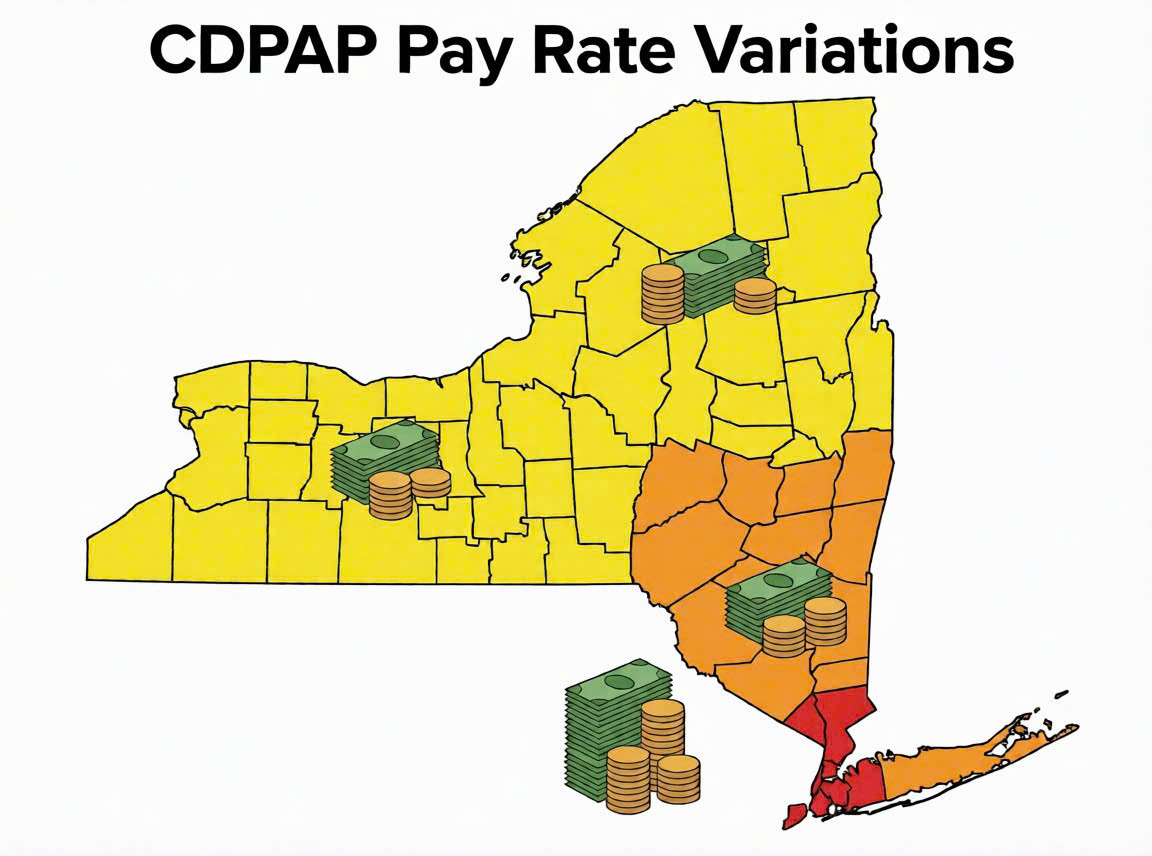
Determinants of the CDPAP Pay Rate Across New York Counties
Understanding the exact Consumer Directed Personal Assistance Program (CDPAP) pay rate requires looking at where you live and work. The state government adjusts compensation rules based on regional economic conditions. Caregivers in different parts of New York will see different hourly wages. This section explains how local laws and geography directly influence your paycheck.
>>> Read more: https://www.humancareny.com/blog/can-family-member-get-paid-to-be-caregiver-in-new-york
Impact of Regional Minimum Wage Legislation
The foundation of the CDPAP pay rate is tied directly to New York State labor laws. The state government mandates specific minimum wage thresholds that all employers must follow. Fiscal Intermediaries use these state-mandated minimums as the starting point for caregiver compensation. As of 2026, the baseline wages have increased across the state to reflect the rising cost of living. Because Medicaid sets a reimbursement cap for Fiscal Intermediaries, the final hourly rate offered to a caregiver usually mirrors these regional minimum wage requirements closely.
Variations Between Downstate and Upstate Compensation
Location is the primary factor affecting how much caregivers earn. New York divides its minimum wage requirements into distinct geographic zones. The cost of living is significantly higher in the five boroughs of New York City and the surrounding suburban counties. Therefore, the mandated base pay for these areas is higher than in the rest of the state.
The 2026 minimum wage baselines that influence the CDPAP pay rate vary by region. In New York City (Bronx, Brooklyn, Manhattan, Queens, and Staten Island) and the remainder of Downstate (Nassau, Suffolk, and Westchester), the baseline is $17.00 per hour. For the rest of New York State, including all upstate and western counties, the baseline is $16.00 per hour.
Caregivers operating in New York City or the surrounding downstate counties will see a higher starting wage than those providing services in upstate regions. Fiscal Intermediaries calculate the final CDPAP pay rate by taking this regional baseline and factoring in any additional Medicaid reimbursements or benefit packages available in that specific county.
>>> Read more: https://www.humancareny.com/blog/24-hour-in-home-care
Does Medicaid Pay for Caregivers in the Home?
Many people want to know how to cover these daily expenses legally and safely. A common question arises during this planning phase: Does Medicaid pay for caregivers in the home? Understanding the exact mechanisms of state funding helps you make confident choices.
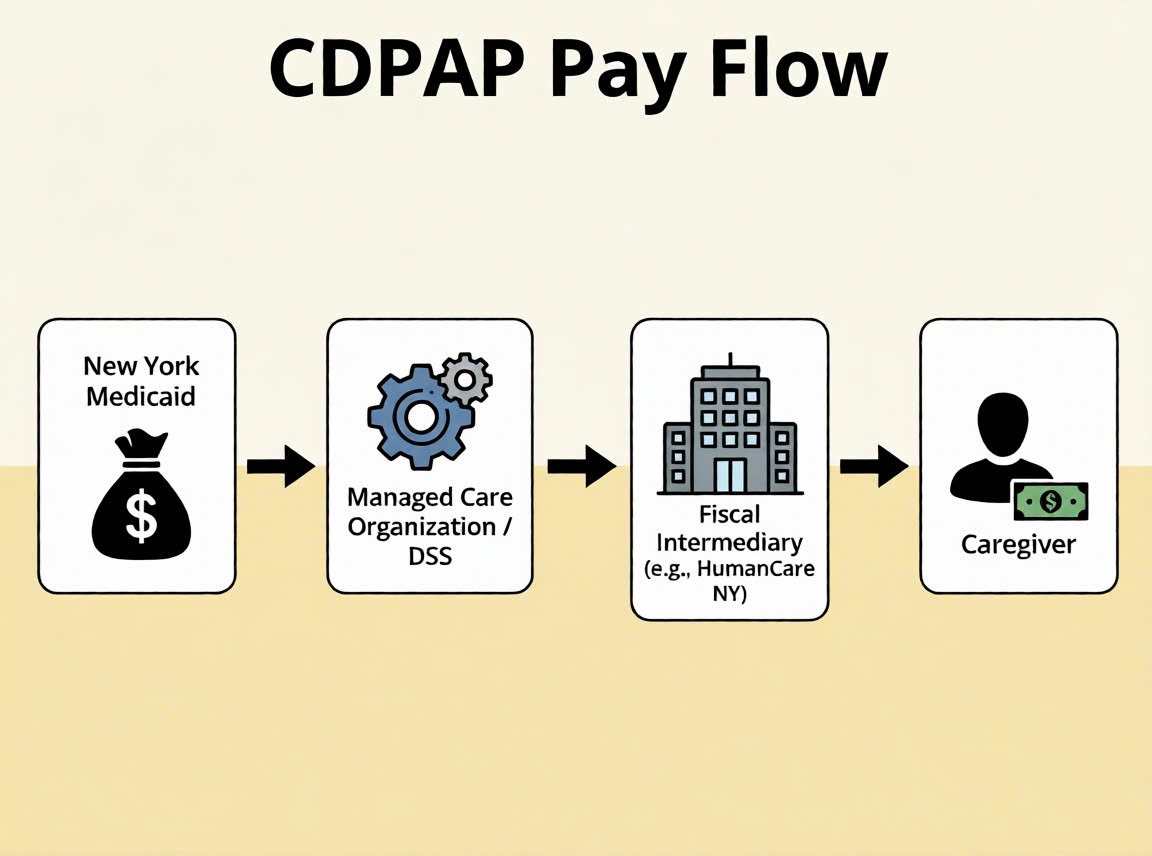
The Role of Medicaid in Consumer-Directed Care
Through the CDPAP, New York Medicaid allows consumers to direct their own home care. Instead of relying on an agency to assign an unfamiliar aide, the patient has the authority to hire a family member or friend. Medicaid funds the entire process. The consumer acts as the official employer, managing the daily schedule and duties of the caregiver. The state recognizes that receiving care from a trusted relative often leads to better health outcomes and a higher quality of life for the patient. To start the enrollment, the patient simply needs a Physician's Order for Services to prove they require at-home assistance.
>>> Read more: https://freedomcare.com/5-ways-you-can-get-paid-as-a-family-caregiver/
Funding Structure for Personal Assistance Services
The payment process involves multiple organizations to ensure legal compliance. Medicaid does not pay caregivers directly. Instead, they allocate funds to a Managed Care Organization or the local Department of Social Services. These groups assess the medical needs of the patient and authorize a specific number of weekly care hours. Once approved, the funds move to a designated Fiscal Intermediary like HumanCare NY. We handle all the administrative duties. We process your timesheets, withhold the appropriate taxes, and issue the actual paychecks, so caregivers are paid reliably.
How Much Does Medicaid Pay for Family Caregivers?
Determining your total income involves looking at several moving parts. When families ask how much does medicaid pay for family caregivers, they must consider more than just the base hourly rate. The final number relies heavily on the specific medical needs of the patient and the resulting weekly schedule.
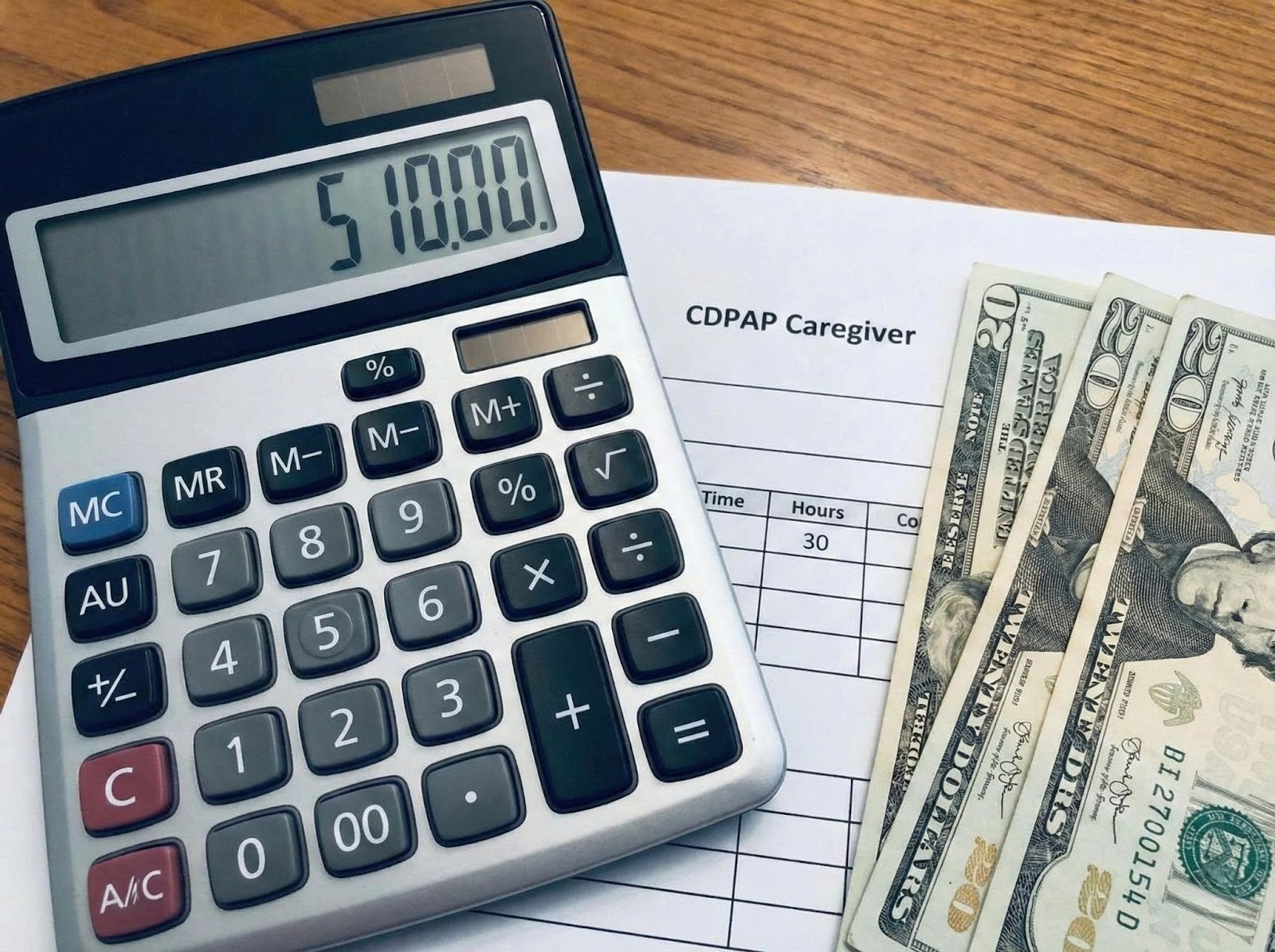
Calculating Weekly Earnings Based on Authorized Hours
When families research how much does medicaid pay for family caregivers, they must look at both the hourly wage and the total authorized hours. The total income a caregiver can expect depends entirely on the medical needs of the patient. A registered nurse from the Medicaid managed care plan evaluates the patient and assigns a strict weekly hour limit.
To calculate the expected weekly gross income, you multiply the authorized weekly hours by the specific CDPAP pay rate offered by your Fiscal Intermediary. For example, if a caregiver in Brooklyn earns $17.00 per hour and the patient is authorized for 30 hours a week, the gross weekly pay would be $510.00. Caregivers are only paid for the exact hours they work and document. If the patient is authorized for 40 hours but the caregiver only submits timesheets for 35 hours, the compensation will only cover those 35 hours.
Understanding Overtime Regulations and Benefit Allocations
Caregivers in the CDPAP program are protected by standard labor laws regarding overtime. Understanding these rules is highly important for maximizing income. If a caregiver works more than 40 hours in a single fixed workweek, they are entitled to overtime pay.
- Overtime Rate:
Any hours worked beyond the 40-hour mark are paid at one and a half times the standard hourly rate.
- Approval Requirements:
Overtime must be explicitly authorized by the patient's managed care plan. Caregivers cannot simply work extra hours and expect overtime pay without prior medical authorization.
The rules differ for live-in aides. They are paid for a specific number of active working hours per day, usually 13 hours, provided they receive adequate uninterrupted sleep and meal breaks.
Beyond the hourly wage, the question of how much does medicaid pay for family caregivers also includes mandatory benefits. Caregivers accrue paid sick leave based on the hours they work. Depending on the Fiscal Intermediary, caregivers might also receive health insurance options, retirement plan contributions, or paid time off.
Comparative Analysis: How Much Does CDPAP Pay vs. Traditional Agencies?
When families decide how to manage home care, they frequently weigh the financial differences between hiring through CDPAP and using a standard home health aide agency. Understanding the variations in compensation models helps caregivers make the best choice for their careers and daily lives.
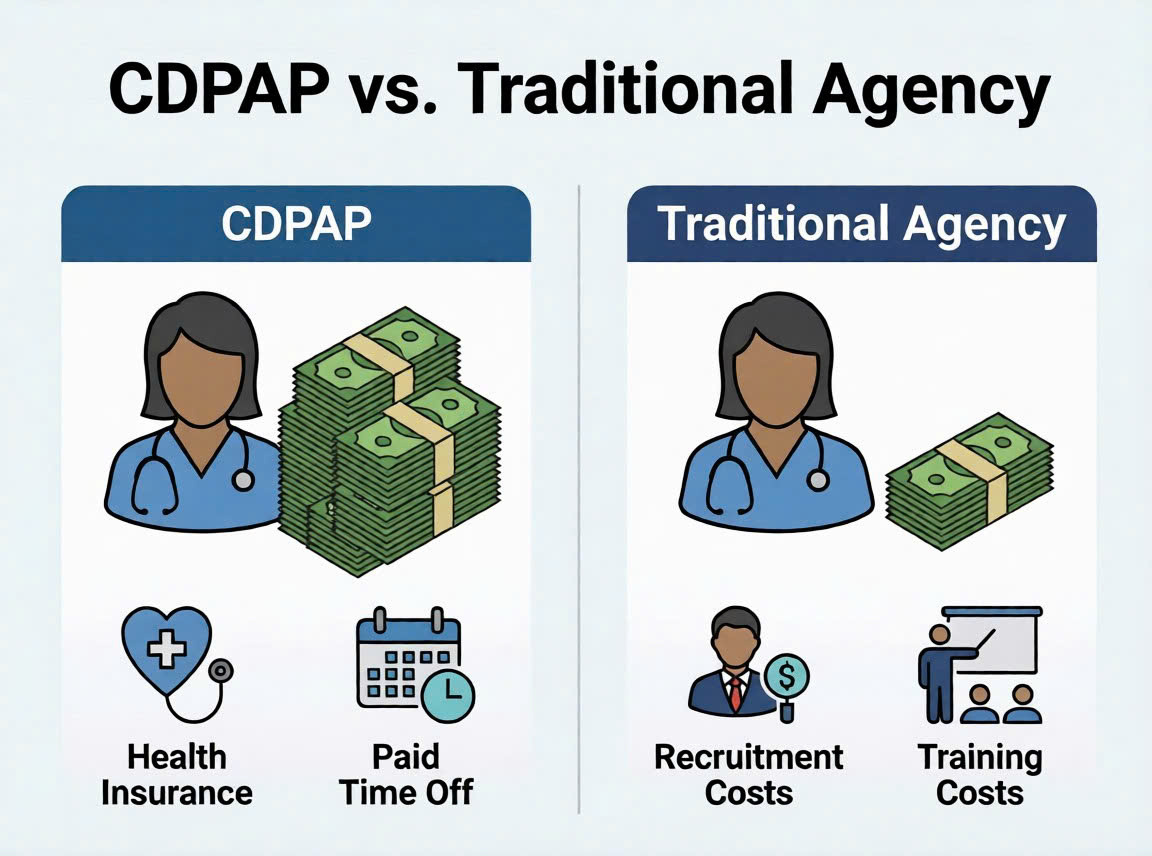
Fiscal Intermediary Administrative Roles Explained
In a traditional agency model, the company takes a larger portion of the Medicaid reimbursement. The agency uses this money to cover the costs of recruiting, formal training, certification, and scheduling aides. Because the agency handles all the management duties, the aide's hourly wage is often lower.
Under the CDPAP model, the patient assumes management duties like hiring and supervising the caregiver. The Fiscal Intermediary simply handles payroll and state compliance. With lower operational costs, the Fiscal Intermediary can pass more of the Medicaid reimbursement directly to the caregiver. This makes the CDPAP pay rate highly competitive within the home care field.
Wage Parity and Supplemental Benefit Packages
In regions like New York City, Nassau, Suffolk, and Westchester, the Wage Parity Law plays a massive role in compensation. This law requires home care employers to provide a minimum level of total compensation. The compensation package includes the base cash wage plus supplemental benefits.
Fiscal Intermediaries meet the Wage Parity requirements in a few different ways:
- Direct Cash:
Adding extra cash directly to the hourly paycheck.
- Health Coverage:
Providing medical, dental, or vision insurance plans for the caregiver.
- Flex Cards:
Offering pre-funded cards that caregivers can use for transit, cell phone bills, or medical co-pays.
- Retirement:
Contributing to a 401.000 or similar retirement savings plan.
When you evaluate how much CDPAP pays, you must look at the entire compensation package. A slightly lower base hourly wage might be offset by excellent health insurance and paid time off. Different Fiscal Intermediaries offer different benefit combinations. It is vital to compare these supplemental packages to understand the true financial value of the position.
Choosing Humancare NY as Your Preferred Fiscal Intermediary
Selecting the right Fiscal Intermediary affects your daily experience in the CDPAP program. Since 2011, HumanCare NY has supported thousands of families across New York with reliable communication and accurate payroll processing. We manage the administrative paperwork so you can focus entirely on caring for your loved one.
Our organization provides highly competitive compensation packages with flexible hours, direct deposit, and sick leave. Full-time caregivers also gain access to medical benefits and retirement plans. Beyond CDPAP, our professionals are available around the clock to offer private duty nursing, pediatric home care, and support for developmental disabilities.
Contact HumanCare NY today at (718) 435-1100 or email info@humancareny.com to maximize your benefits under the CDPAP.