When families explore long-term care options, they often discover the NHTD waiver program. This initiative offers a vital alternative to nursing facilities for individuals wanting to remain in their communities. If you are exploring this option, understanding the guidelines and support systems available can make the process clearer.
At HumanCare NY, we guide families through these exact guidelines and provide the hands-on care required for a successful transition. We work directly with individuals in the local area to set up and manage approved services under this state initiative. Our team supplies the required personal care and professional oversight so participants can comfortably and safely maintain their independence at home.

What Is NHTD?
Many people ask exactly what NHTD is and how it functions within the state healthcare system. The acronym stands for Nursing Home Transition and Diversion. This Medicaid initiative supports individuals with physical disabilities and seniors by providing care in a community setting rather than a medical institution. The program supplies funding and services directly to the participant. The state recognized that many individuals living in nursing homes could live safely at home if they had access to specific daily assistance.
By utilizing federal and state Medicaid funds, the government pays for caregivers, medical equipment, and home modifications. This approach reduces the financial burden on the state while giving participants a better quality of life. The individual directs their own care. They decide where they want to live and who will provide their daily assistance.
The Philosophy of Nursing Home Transition and Diversion
The foundation of this system rests on personal choice and autonomy. The state developed this initiative, believing that seniors and individuals with physical disabilities have the right to control their living environments. Participants make primary decisions regarding their daily routines. They choose their service providers and define their personal goals. This philosophy shifts the focus from institutional control to individual empowerment. Participants have the right to take measured risks and learn from their experiences. The system supports these choices while ensuring a basic level of health and welfare.
>>> Read more: https://www.humancareny.com/blog/nhtd-vs-other-medicaid-waiver-programs-what-you-need-to-know
Prioritizing Community Living Over Institutionalization
Living at home promotes dignity. Community-based settings allow individuals to stay close to family members and remain active in familiar neighborhoods. The program aims to either transition current nursing home residents back to the community or divert those at risk of institutionalization from entering a facility in the first place. By providing targeted medical and personal support at home, the state reduces the reliance on institutional care. Institutional settings often require strict schedules for eating, bathing, and sleeping. Returning to a private home allows the individual to reclaim their personal schedule and daily habits.
Who Does the NHTD Program Help?
Understanding who the NHTD program helps requires looking at specific medical and financial criteria. The system targets New York residents who need a nursing home level of care but prefer to live safely at home with the right support. The application process involves rigorous evaluations to confirm that the individual meets all state and federal guidelines.

Age and Disability Requirements for Participation
Applicants must meet specific demographic criteria to qualify.
- Individuals must be between the ages of 18 and 64 with a documented physical disability.
- Seniors aged 65 and older qualify based on age and care needs alone.
- For applicants under 65, acceptable proof of physical disability includes award letters from Social Security Disability Insurance (SSDI) or Supplemental Security Income (SSI).
- Individuals who enroll before turning 65 can remain in the program after they reach their 65th birthday.
Assessing Medicaid Eligibility and Housing Criteria
Financial and residential factors play a major role in the approval process.
- Medicaid Status:
Applicants must be eligible for community-based Medicaid. This specific coverage pays for long-term care services outside of a hospital or nursing home.
- Income and Assets:
Married couples can sometimes use spousal impoverishment rules. These rules protect a certain amount of income and assets for the spouse who does not need care.
- Level of Care:
A medical assessment must confirm that the individual requires the level of care typically provided in a nursing facility. This functional assessment looks at the person's ability to perform daily tasks.
- Housing:
Participants must have a safe living environment. The residence must comply with Home and Community-Based Services regulations. The home cannot be an institution or a setting with four or more unrelated adults.
To qualify for the NHTD waiver, applicants must be aged 18–64 with a physical disability or 65 and older, hold active community-based Medicaid coverage, require a nursing home level of care as confirmed by assessment, and secure a safe, compliant residence in the community.
>>> Read more: https://www.kff.org/medicaid/what-is-medicaid-home-care-hcbs/
How Many NHTD Waiver Services Are There?
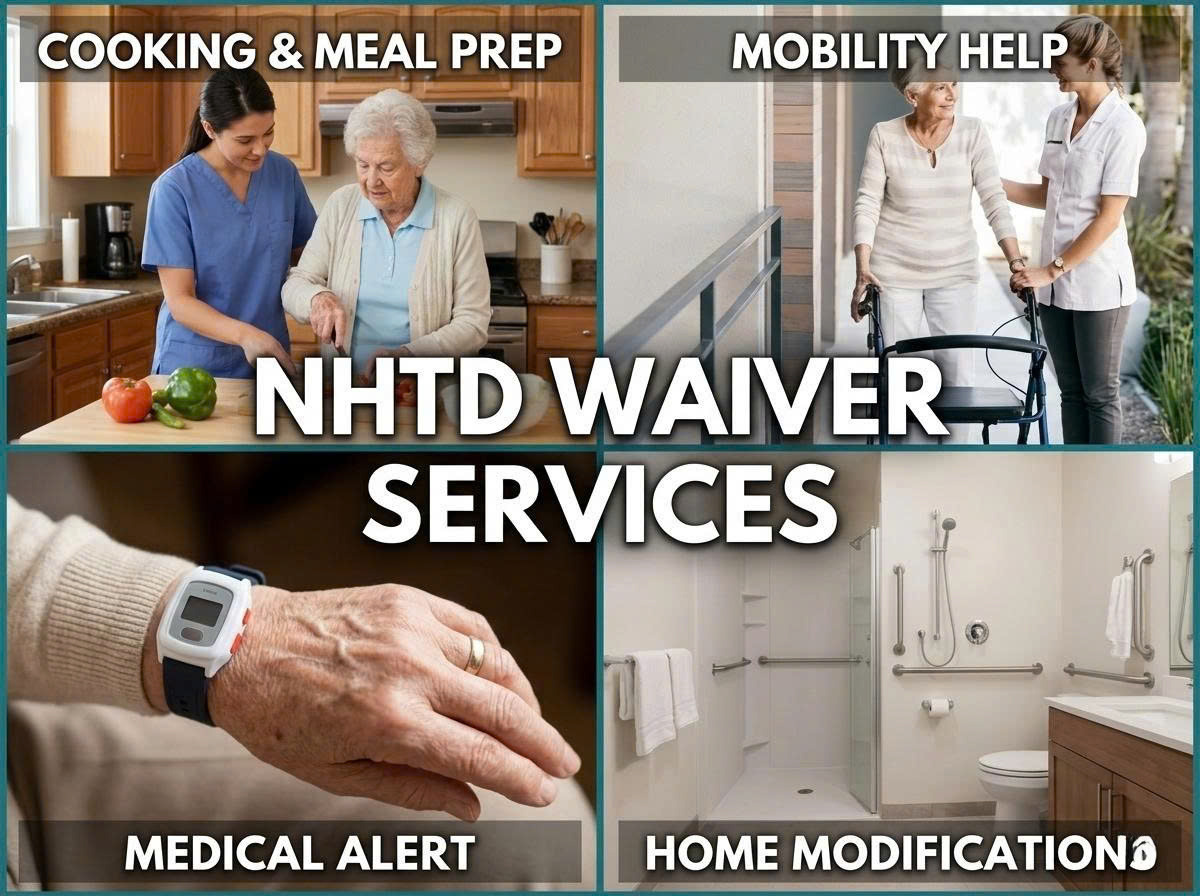
The program offers a diverse menu of 18 distinct services. Participants do not need to use every service. They select only the specific supports that match their medical and personal requirements. This customized approach prevents the waste of medical resources and ensures funding goes exactly where the individual needs it most.
Service Coordination and Independent Living Skills Training
Every participant works with a service coordinator. This professional helps develop an individual service plan and connects the participant with approved providers. Another highly utilized service is independent living skills training. This training assists individuals in recovering or maintaining the abilities needed to live independently. Trainers work on tasks like managing finances, cooking, and organizing daily schedules. For individuals with progressive physical conditions, this training focuses on maintaining current abilities for as long as possible.
Home and Community Support Services (HCSS) Explained
Home and Community Support Services (HCSS) provide direct, hands-on assistance. Staff members help participants with activities of daily living.
- Bathing and dressing.
- Meal preparation and feeding.
- Mobility assistance within the home.
- Light housekeeping and laundry.
Other available services expand beyond basic home care. The state provides environmental modifications to make homes wheelchair accessible. Assistive technology covers communication devices and specialized medical equipment. Nutritional counseling helps participants manage specialized diets. Peer Mentoring connects new applicants with current participants who can share their personal experiences with the transition process. Additional options include respiratory therapy, moving assistance services, and positive behavioral interventions and supports.
>>> Read more: https://www.hhs.texas.gov/providers/long-term-care-providers/home-community-support-services-agencies-hcssa

Navigating the Application Process for the NHTD Program in New York
Applying for the NHTD program in New York City requires following a structured path. The dense population and high demand in the metropolitan area mean applicants must submit accurate and complete paperwork. Families often face waiting periods while the state processes applications. Working with experienced agencies can speed up this process by ensuring all forms are correct upon the first submission.
Steps to Enrollment and Regional Resource Development Centers
The New York State Department of Health manages the waiver through Regional Resource Development Centers (RRDC).
- Initial Referral:
The process begins by contacting the local RRDC. A discharge planner, social worker, or family member can submit this referral.
- Intake Meeting:
RRDC staff schedule a meeting with the applicant to explain the program rules and verify basic eligibility.
- Selecting a Service Coordinator:
The applicant chooses a Service Coordinator to guide them through the rest of the application.
- Developing the Service Plan:
The coordinator helps the applicant build a detailed care plan outlining the requested services. This plan must show that the requested services will keep the individual safe at home without exceeding the cost of nursing home care.
- Final Approval:
The RRDC reviews the plan and grants final approval for services to begin.
Transitioning from a Skilled Nursing Facility to Home
For individuals currently residing in a nursing home, the return to community living involves specific transitional support. The program provides Community Transitional Services to cover the one-time expenses associated with setting up a new household. This funding can pay for security deposits, basic furniture, and utility setup fees. Discharge planners work closely with the RRDC and the chosen Service Coordinator to ensure a safe discharge date. Social workers arrange for all medical equipment and home modifications to be completed before the participant moves in.
>>> Read more: https://www.medicaidplanningassistance.org/new-york-nursing-home-transition-diversion-waiver/
The Role of Service Coordinators in Managing Your Care Plan
The Service Coordinator acts as the central point of contact for the participant. This professional does not provide direct medical care. They act as an organizer and advocate. When a participant's medical condition changes, the Service Coordinator updates the care plan to reflect those new realities. They monitor the quality of services provided by the chosen home care agencies.
If an individual feels dissatisfied with a specific caregiver, the Service Coordinator helps them select a new agency. They conduct regular home visits to ensure the environment remains safe and that the participant is achieving their defined goals. The coordinator also communicates with doctors and local social services departments to maintain the participant's active Medicaid status. This ongoing management prevents lapses in care and keeps the individual safely housed in their community.
Accessing Compassionate NHTD Support with Humancare NY
Securing the right home care agency makes a significant difference in a participant's daily life. Humancare NY provides specialized care under this Medicaid waiver. We supply highly trained professionals who understand the specific needs of individuals transitioning out of nursing homes. Our team prioritizes patient safety and personal dignity. We handle the complex medical and personal care tasks so our clients can focus on living comfortably in their own homes.
Humancare NY serves the New York City region and surrounding areas with dedicated support staff. We offer flexible scheduling and personalized attention. Our staff includes registered nurses and home health aides who receive continuous training. We match our caregivers to the specific personality and medical requirements of each client. Families trust Humancare NY because we maintain open lines of communication and respond quickly to changing medical situations.
Contact HumanCare NY today at 718-435-1100 so that we can help you evaluate your options and submit the correct paperwork. Our team will guide you through the initial assessments and connect you with the right local resources to establish a safe home environment.